Anish Kapoor: Dissolving Margins
Jordan Schnitzer Museum of Art at Portland State University, Portland, OR - To Dec 5
British artist Anish Kapoor hit peak popularity with his sculpture Cloud Gate (2004) in Chicago’s Millennium Park, the silvery bean that is perfect for selfies, and peak controversy in 2016 when he became the only artist licensed to use the “blackest black” paint called Vantablack (since superseded). But the sculptor has a long career as a printmaker, and Jordan Schnitzer is a big collector.
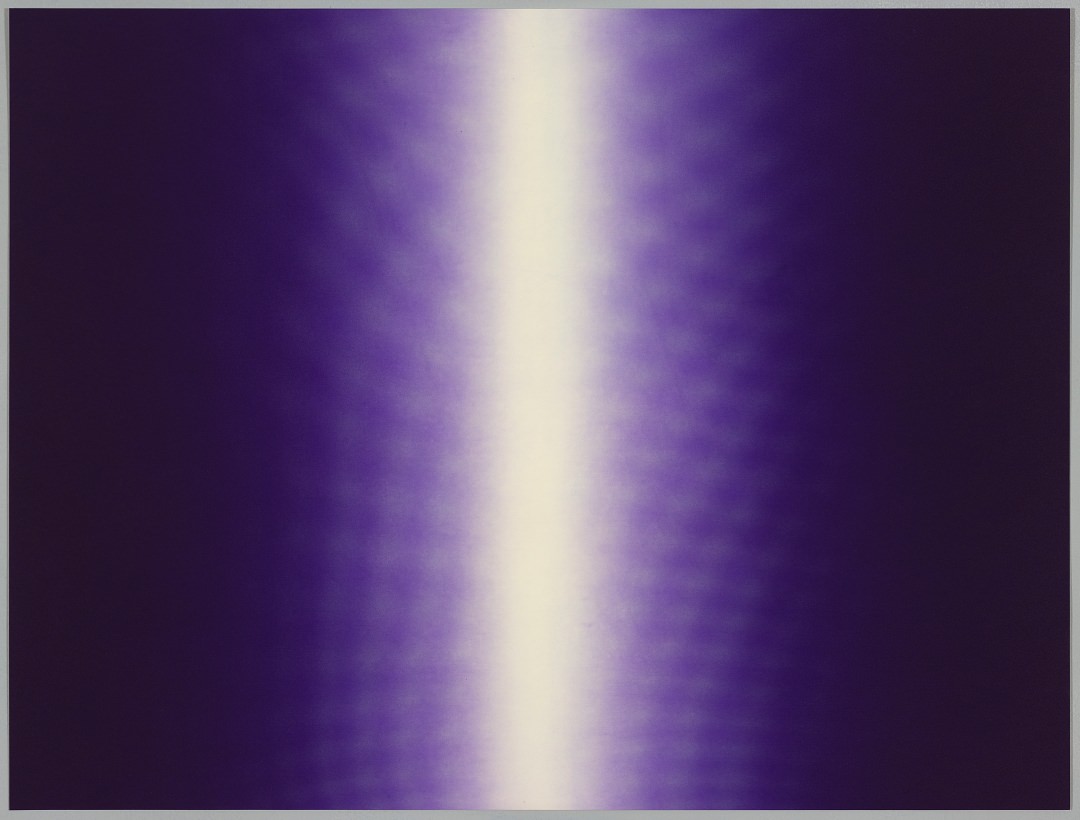
Anish Kapoor: Dissolving Margins, from the Collections of Jordan D. Schnitzer and His Family Foundation explores nearly four decades of Kapoor’s printmaking practice. Here you can see the editions that Schnitzer swoons over: so many mesmerizing pools of color with hard-to-define edges, which seem to breathe or vibrate.
Born in 1954 in Mumbai, India, Kapoor moved to London in the early 1970s to study art. In one of his breakthrough series, 1000 Names, he sprinkled pigment powder on oddly shaped cones, pyramids and other shapes. He also added the vivid matte powder to the floor around the shapes so they seemed to float.
As he matured, his sculptures became bigger and more extreme, evoking blood, viscera and sex organs. His prints are a welcome relief from all that. They still show a fascination with color, as though he is searching for the purest pink or princeliest purple. Here we see organic forms that could be high-altitude clouds, jellyfish or muscle mass. The gallery shows black-and-white prints of the same forms next to the color versions, inviting the eye to dart and the mind to play a memory game, of which piece goes where.
The works are stylishly presented by Schnitzer’s foundation. Several huge folded pieces are in shadow boxes, where the deep crevice of a book spine holds the deepest pigment. With over 150 unique impressions, from his earliest experi- ments to his most recent work, this is Kapoor’s first retrospective survey dedicated to prints. Catch them before they vanish.