Runway to Runway: Styles and Stories of Flight Attendant Fashions
The Museum of Flight, Seattle, WA - To Jan 18, 2027
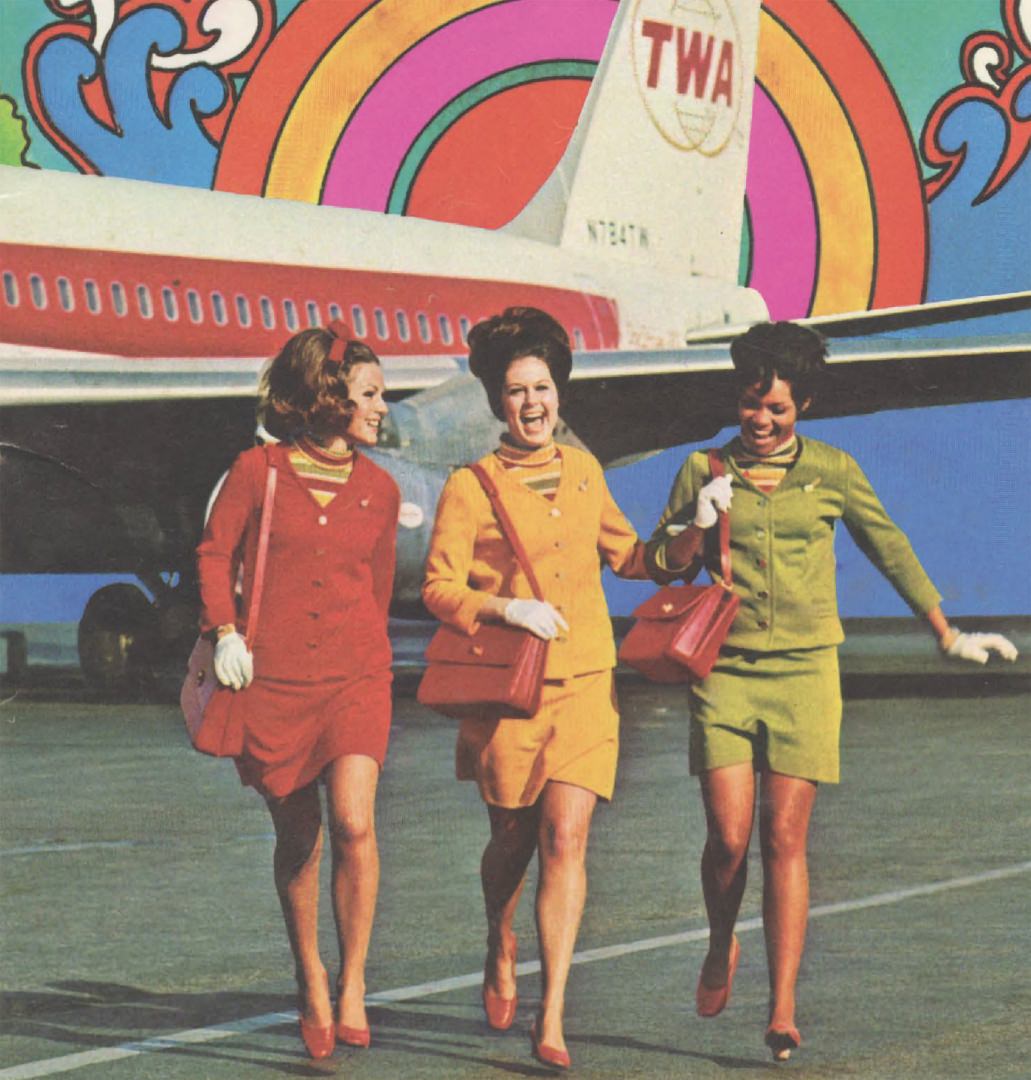
Today’s traveler may imagine “the golden age of flying” (1960s–70s) as an almost mythological era of aviation (Beluga caviar in ice swans! Spiral staircase to the top-deck cocktail lounge! Fashion shows at 30,000 feet! More leg room!). While Pan Am and TWA topped the pantheon of great airlines, it was the stylish, picture-perfect stewardess (as they were then called) that carried the industry’s glamorous image.
Runway to Runway, at the Museum of Flight, explores how airline fashion followed the narrative of social change during the postwar boom. The exhibition features 100 artifacts, including uniforms and accessories by international couturiers such as Valentino, Pucci, Edith Head and Luly Yang. Styles range from classic tailoring to Star Trek–worthy paper dresses and go-go boots. Destination themes include a photograph of TWA’s notorious “English serving wench” uniform, worn on UK routes in 1968.
The stories and exhibits in Runway to Runway echo the social upheaval that rocked America during the Vietnam era and beyond. During this period, flight attendants faced racism, sexism and ageism (retirement age: 32), mandatory weigh-ins and firing should they choose to marry. While providing the backbone of air service and trained for emergencies from downed planes to hijackings, these professionals were most prized for making air hosting look easy and sexually appealing. Male air stewards were first hired in 1971.
Still, as many interviewees for this exhibition attest, being a flight attendant did provide an unparalleled, glamorous portal to the world—and eventually, a proud legacy. Thanks to their long-standing activism in labor unions, the women’s movement and leadership positions in the industry, today’s air travel is safer, healthier and smoke-free, for both employees and passengers.