How We Show Up
Oregon Jewish Museum and Center for Holocaust Education, Portland, OR - June 28 – Nov 29
How We Show Up: An America 250 Exhibition explores the ways Jewish Oregonians have participated in public life, tracing a long tradition of civic engagement shaped by leadership, service and advocacy. The exhibition spans Jewish civic life in Oregon from roughly the 1840s through the early 21st century and deliberately reaches beyond Portland, although the city features prominently as the historic center of Oregon Jewish life.
Rather than spotlighting lesser-known figures, the exhibition focuses on prominent individuals who shaped Oregon’s history, among them Bernard Goldsmith (Portland’s first Jewish mayor), US Senator Ron Wyden, politicians Julius Meier, Vera Katz, Suzanne Bonamici, Ellen Rosenblum, Richard Neuberger, and Judge Gus Solomon.
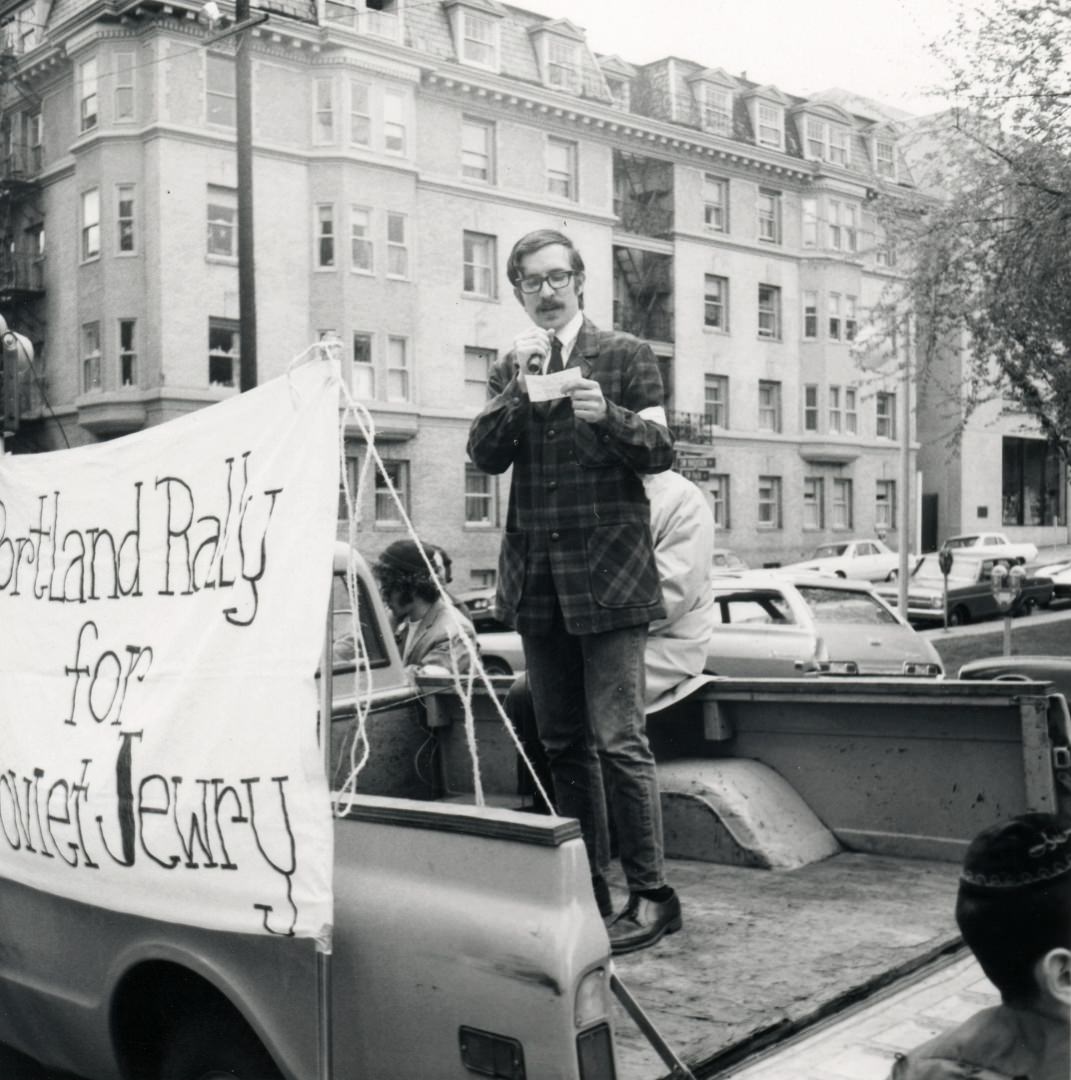
The show is organized into three thematic sections: leadership, service and advocacy. It presents a mix of enlarged photographs, newspaper clippings, correspondence, ledgers, flyers and organizational records, alongside approximately 15 physical artifacts displayed behind Plexiglas. An interactive digital table allows visitors to select individual figures and explore related documents and photographs. The exhibition concludes with a forward-looking “wish wall,” inviting visitors to record their hopes for Oregon’s future.
Housed in the OJMCHE’s smaller east gallery, it draws almost entirely from the museum’s permanent collection, with several items on loan from institutions, including the Library of Congress, Portland City Archives and the Oregon Historical Society. Alisha Babbstein, director of collections and exhibitions, told Preview that the show marks Oregon’s participation in the America 250 commemoration, a word she prefers over “celebration,” reflecting a more measured historical perspective on the milestone.
The stories of early Jewish mayors across Oregon, women who organized networks of immigrant support and social welfare, lawyers, activists and leaders who expanded civil rights and democratic participation include moments of tension and contradiction, as the show explores the complexities of minority politics and limits of acceptance. As Babbstein points out, Jews were more welcome in Oregon before the Ku Klux Klan’s rise to power in the 1920s and subsequently became more active in civil rights. The show asks how communities participate in civic life and how the next generation will choose to show up.
Free Sunday guided tours Aug 16, Sep 6, Oct 4 and Nov 1