Becoming: The Art of Gu Xiong
Museum of Vancouver, Vancouver, BC - To Feb 7, 2027
Born in Chongqing, China, in 1953, Gu Xiong was 13 at the start of the Cultural Revolution. At 18, he was sent to work in the countryside, where he began sketching scenes of rural life in his free time. After completing
an MFA at Sichuan Fine Arts Institute in 1985, he was encouraged by visiting Vancouver curator Alvin Balkind to accept a residency at Alberta’s Banff Centre—becoming the first artist from the People’s Republic to do so. Gu faced increasing censure upon returning to China, eventually leaving for Vancouver four months before the Tiananmen Square protests of 1989.
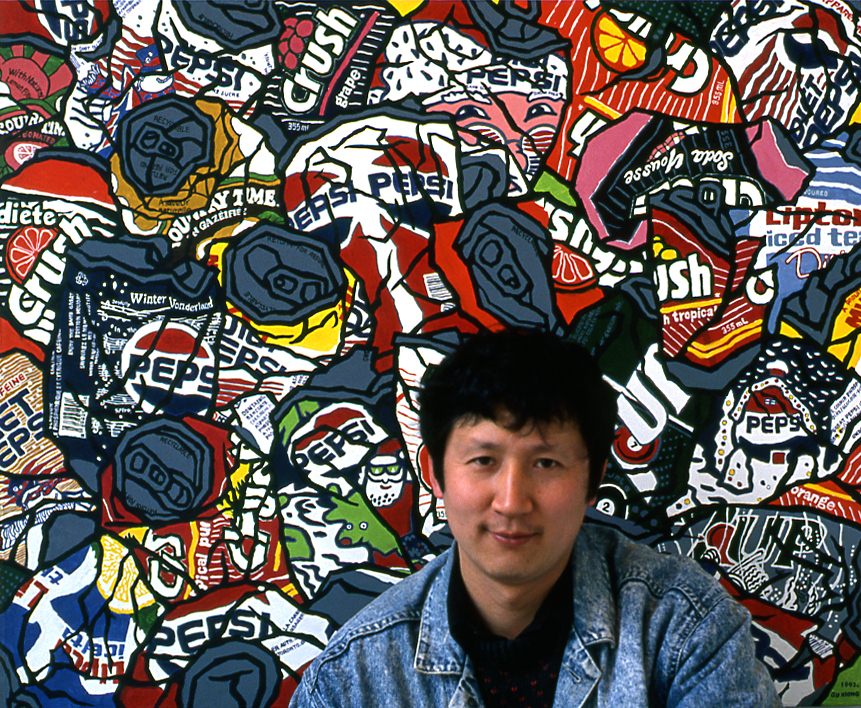
Gu, whose English was limited at the time, found work in the cafeteria of UBC’s Student Union Building, an experience that both shocked and inspired him. Shocked by the wastefulness of Western culture; inspired by the patterns the waste revealed. Some of Gu’s best-known works include drawings and paintings of crushed pop cans, a motif he returned to long after he left his cafeteria job, only to return to UBC in 2000 as faculty in the Department of Art History, Visual Art and Theory.
MOV’s Becoming: The Art of Gu Xiong honours 50 years of artistic practice with a selection of landmark works in a range of media. Displayed over three galleries, they each mark a key period in the artist’s life. In addition to the Crushed Cans painting and silkscreen series (1991–93), other works include the chain-link-patterned Enclosures (1989–2026), which Gu was censured for at the China/Avant-Garde exhibition in Beijing, and Yellow Cargo (2016–26), a monumental installation that takes on globalization and its aftermath: migration.