I Use My Haida Eyes: The History Robes of Jut-ke-Nay–Hazel Wilson
Museum of Anthropology at UBC, Vancouver, BC - To Oct 12
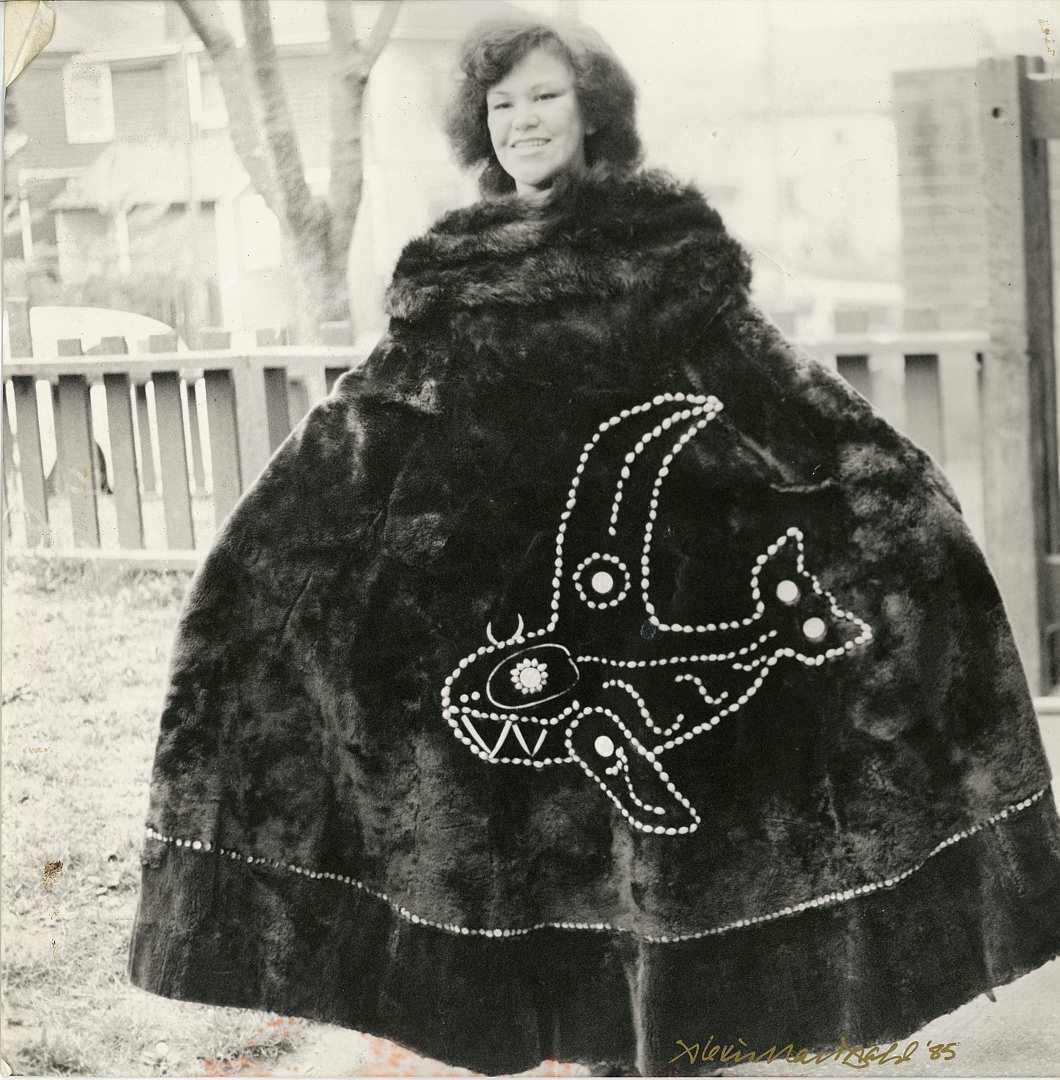
When curator ɬəkʷəlqinəm Jordan Wilson first saw the history robes made by Haida artist Jut-ke-Nay–Hazel Wilson up close and in person, they took his breath away. The robes—51 in total—draw from the tradition of Haida button blankets but stand out as a result of the representational and narrative quality of the work, documenting Haida history from a Haida perspective.
Surprised to learn that these robes had never been displayed as a full collection, when Jordan stepped into his position as curator of Pacific Northwest and contemporary Indigenous art at the Museum of Anthropology at UBC (MOA) last year, “this was the first thing that came to mind,” he says. The result is I Use My Haida Eyes: The History Robes of Jut-ke-Nay–Hazel Wilson, an exhibition that premiered at MOA on May 14 and showcases all of the robes except one. Constructed from traditional and contemporary materials, Hazel also painted on the fabric with acrylic paints, something Jordan describes as “particularly noteworthy.”
“It blurs these boundaries of like, ‘Is this history painting, because she is painting these historical scenes and landscapes?’ But then it’s combined with the appliqué of all different kinds of fabric, including the more traditional choice of melton wool,” he says. The work is also incredibly layered in terms of form, he explains, as it not only expands on the traditional button blanket but inspires questions for the viewer: Is it ceremonial? A wearable garment? A wall hanging?
Through this collection, Hazel, who died in 2016, uses narrative to explore her Haida ancestry, the arrival of settlers, and her own childhood memories of gathering and harvesting in Haida Gwaii. It’s especially remarkable that these robes were created in 2006, over a period of only about a year. “When you see these works in person, it feels like they give the impression that they’ve been in the making for a decade,” says Jordan. “She was in a very creative and productive moment in her life.” Each robe is accompanied by Hazel’s own text, which explains the historic episode being represented.