Tom Lloyd
Frye Art Museum, Seattle, WA - May 16 – Sep 20
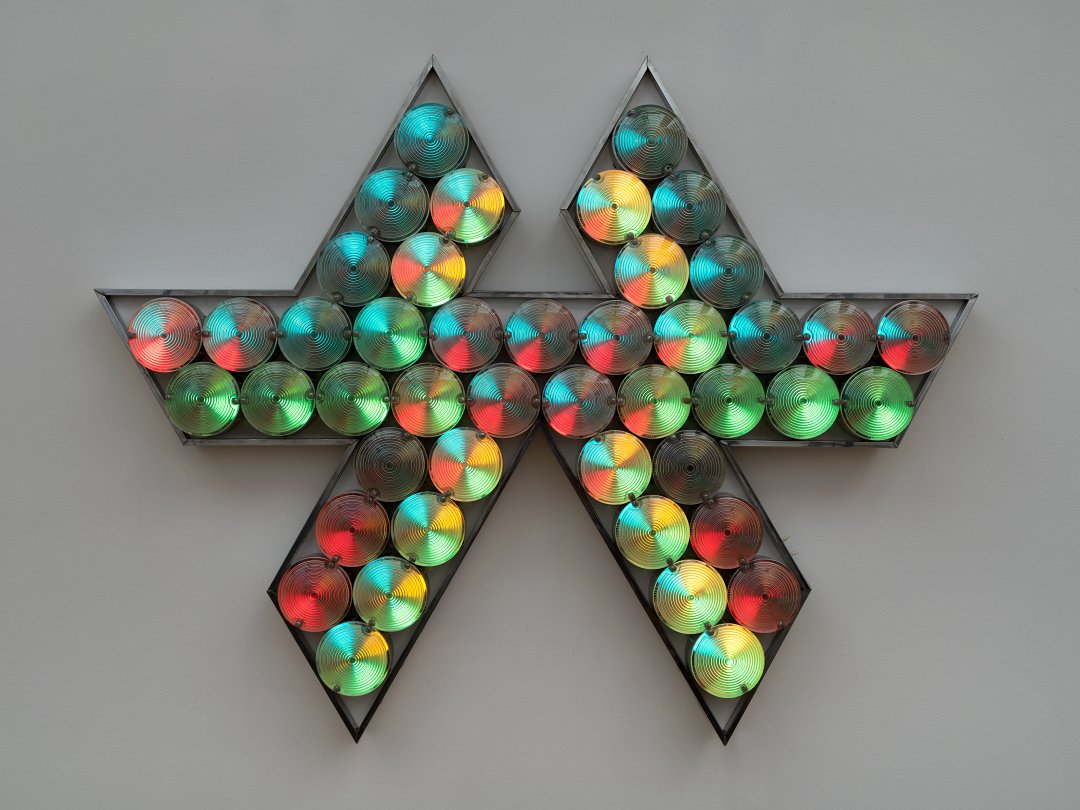
When the Studio Museum in Harlem opened in 1968, its inaugural exhibition was Electronic Refractions II, a survey of Tom Lloyd’s groundbreaking electronic light sculptures. In the ensuing decades, the museum grew into an institution internationally renowned for its presentation of and support for artists of the African diaspora. It acquired, expanded and then outgrew its current location on West 125th Street. After a complete reconstruction, the museum reopened in 2025 with Tom Lloyd, a retrospective including seminal works from the 1968 exhibition. The show opens at the Frye in Seattle mid-May.
“The radical choice in making him the inaugural show was not that he was a Black artist … but rather that he was an artist working in a new technology,” says Studio Museum director Thelma Golden. Referencing urban sights like traffic signals and theater marquees, Lloyd used common industrial materials: sheet metal, translucent plastic covers from automobile taillights and Christmas tree lightbulbs. In an innovative cross-disciplinary collaboration, Lloyd worked with an engineer from the Radio Corporation of America (RCA) to program the lights to flash in a sequence of different color combinations.
In the 1960s, most Black artists worked in figurative or narrative styles. Lloyd’s embrace of new technology and abstraction as an expression of Blackness was controversial. A disgruntled visitor tried to vandalize the 1968 show. This was ironic, since Lloyd was a fierce and visible advocate for Black artists. In 1971, he founded the Store Front Museum/Paul Robeson Theatre in an abandoned warehouse in Queens. The show includes photo documentation of Lloyd’s community activism and the development of his light sculptures, several of the sculptures themselves, plus early assemblages and works on paper.
“I think our founders were deeply aware of what it meant to sit in this specific moment of the mid-1960s, when technology was rapidly progressing at the same time as the civil rights movement,” says curator Connie Choi. “[They] recognized that Black artists could be at the core of that.”