Eternal Forms: The Sculpture of Everett DuPen
Cascadia Art Museum, Edmonds, WA - To Sep 13
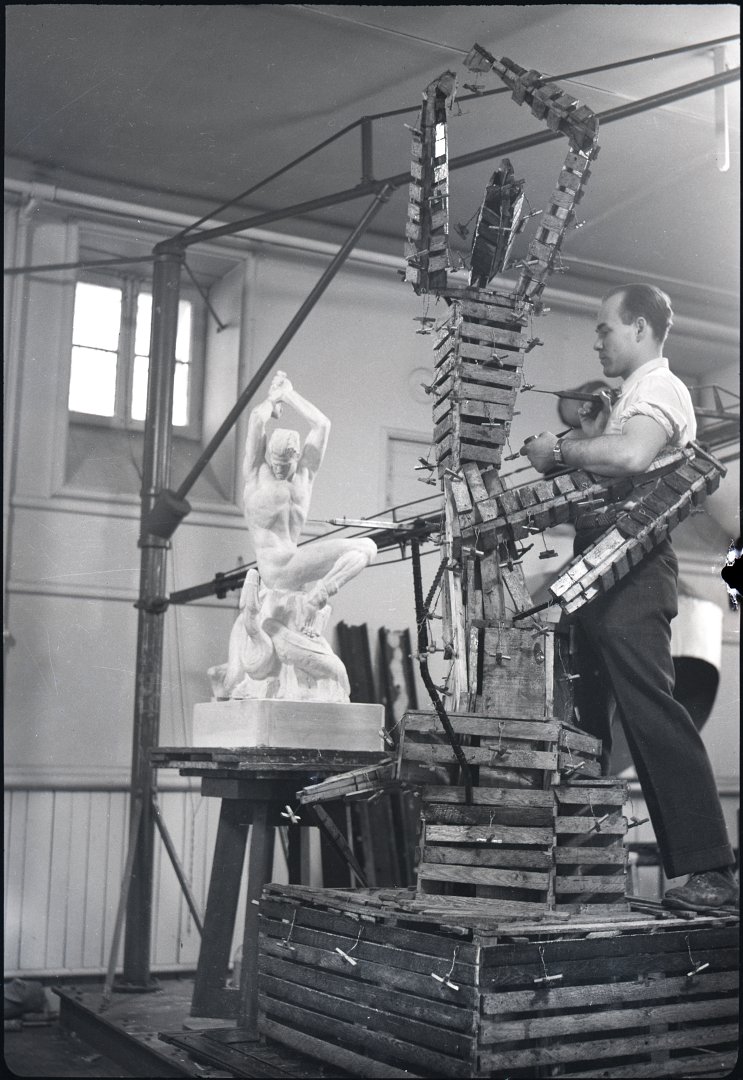
Everett DuPen (1912–2005) was the godfather of Northwest American sculpture. He was part of the first generation hired by University of Washington School of Art founders Ambrose Patterson and Walter F. Isaacs in 1945 and taught until his retirement in 1982. Responsible for the university producing many noted sculptors, DuPen had studied architecture at Harvard before transferring to the Yale School of Art (BFA 1937), where he studied sculpture under Swiss émigré
Robert Eberhard, a student of Rodin.
For Eternal Forms, curator David F. Martin has assembled 25 of the 60 artworks donated to Cascadia by the artist’s family, accompanied by a monograph detailing the artist’s career beyond academia. DuPen vacillated between realistic figuration, abstracted figuration and strict abstraction—not surprising considering how long his career was and how many different styles and modern art developments it spanned. Seattle is peppered with DuPen public sculptures, including his most celebrated, Fountain of Creation, at Seattle Center. The reflecting pool, remodeled in the 1990s, contains a sequencing of several bronze sculptures, including Tree of Life, all commissioned for the 1962 Seattle World’s Fair.
Professor DuPen demonstrated through his work how various styles—figurative and abstract— were best applied, depending upon the public site and audience. His influence upon students such as Dale Chihuly, Georgia Gerber and Phillip Levine meant that modern sculpture could develop beyond classical materials such as stone and bronze and into media like ceramics and glass, which he invited into the department.
Martin has carefully selected a range of images, styles and materials to display DuPen’s versatility and mastery of many different media. This openness to pluralism was a strength of the teacher as well as the artist, whose long career encompassed numerous gallery and museum shows. He was invited to exhibitions in St. Louis, San Francisco and New York, where he was named a fellow of the National Sculpture Society.